
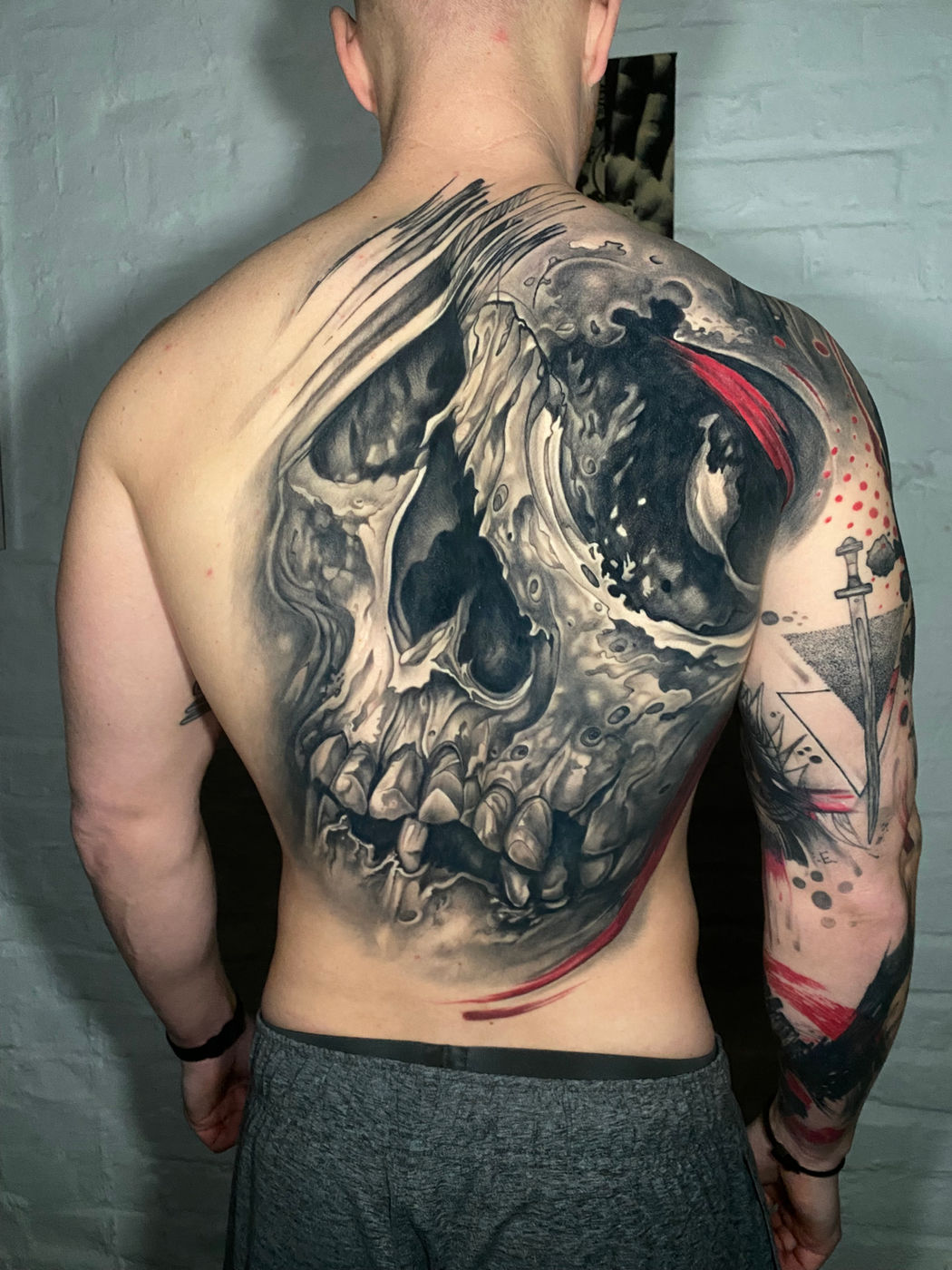
How a Cover-Up Tattoo Works
A cover-up places a new tattoo over an old one so that the original disappears into the new design. Tattoo ink doesn't simply paint over old ink like a wall; the old tattoo will always be underneath. The skill lies in designing something that uses darker areas, texture and clever composition to absorb the old lines so the eye only sees the new piece.
That makes cover-ups one of the most technically demanding jobs in tattooing. They need an artist who can design around constraints and who knows exactly how dark, how large and how busy the new piece needs to be.
What Makes a Tattoo Easy or Hard to Cover?
| Factor | Easier to cover | Harder to cover |
|---|---|---|
| Darkness | Faded, light or grey ink | Fresh, solid black |
| Size | Small, thin lines | Large solid areas |
| Colour | Light colours, faded tones | Deep blues, blacks, heavy reds |
| Space around it | Plenty of clear skin around it | Tight placement, other tattoos nearby |
| Your expectations | Open to a bigger, darker design | Want something smaller and lighter |
The honest rule: a cover-up almost always has to be bigger and darker than the original. If you want something much smaller or very light, laser fading first may be the better route.
Styles That Work Best for Cover-Ups
- Black & grey realism: deep shadows and texture hide old lines very effectively. Animals, statues, skulls and portraits are classic choices.
- Blackwork and Polynesian designs: solid black can cover almost anything, and the bold shapes still look intentional.
- Nature and organic shapes: feathers, leaves, roses and fur add lots of natural texture to hide old outlines.
- Colour realism: rich darker colours can work over faded tattoos.
Delicate fine line designs are generally not suitable for covering an old tattoo, because there isn't enough ink to hide what's underneath.
Cover-Up, Rework or Laser?
Cover-up
The old tattoo disappears completely into a new design. Best when you don't like the old tattoo at all.
Rework
If the original idea is fine but the execution has aged badly (blurry lines, patchy shading, faded colour), Björn can rework it: sharpening lines, adding shading and depth, and bringing it back to life without changing the subject.
Laser fading first
For very dark tattoos, or if you want a lighter new design, a few sessions of laser fading at a specialist clinic can lighten the old ink and give us far more freedom. We don't offer laser ourselves, but we'll tell you honestly if it would get you a better result.
Our Cover-Up Process
- Send a photo. A clear, well-lit photo of the old tattoo, taken straight on in daylight, with something for scale.
- Honest assessment. Björn will tell you what's realistically possible: size, style and darkness. If a cover-up isn't the best option, we'll say so.
- Design over a tracing. The new design is drawn over a tracing of the old tattoo so every old line is accounted for.
- Stencil check. On the day, you'll see exactly how the new piece sits over the old one before we start.
- Tattoo and heal. Larger cover-ups may need more than one session to build up enough depth.
The most common cover-up we see? Names of ex-partners, small holiday tattoos from years ago and faded tribal bands. You are not the first, and we never judge. We'll just help you get something you love.
Where Our Cover-Up Tattoo Clients Come From
Our studio is on Avenida de España in Calahonda, right on the coast road between Marbella and Fuengirola, so it is an easy drive from most of the western Costa del Sol. Clients regularly come to us from:
- Marbella – about 20 minutes by car
- Fuengirola – about 15–20 minutes by car
- Calahonda – right here in Calahonda
- La Cala de Mijas – about 10 minutes by car
- Riviera del Sol – about 5 minutes by car
See all the areas we serve or browse our other tattoo styles.